How much does a design sprint cost in 2026? The honest answer is that the price depends on three things, and almost nobody puts a number on a public page.
The format itself is well defined. The Sprint book by Jake Knapp and John Zeratsky describes a five day process, and the method was originally created by Jake Knapp at Google in 2010.
Agency pricing is a different story. Checking six sprint providers in November 2026 turned up exactly one published figure, and it belongs to a single firm.
That leaves buyers guessing. So this guide works backward instead, from the variables that actually move the number to the ranges you should expect to hear on a scoping call.
Every figure below was read off the provider’s own live page in November 2026. Where a company quotes privately, this guide says so rather than inventing a range.
What Drives the Price of a Design Sprint
Two sprints with the same name can differ by a factor of two in price. These five variables explain most of the gap.
- Scope. One use case and one user flow is the cheapest unit of work. Two or more use cases, or one genuinely complex one, moves you into custom pricing.
- Whether you get code. A clickable prototype is a design artifact. A deployed prototype with a scalable codebase is engineering, and it is the single biggest price jump in the table below.
- Team composition. A designer plus an advisor costs less than a designer plus a full stack developer. Ask who is actually in the room for the full engagement.
- Duration. Five days is the canonical format. Anything described in weeks rather than days has build work folded into it.
- User testing. Recruiting real users costs money and calendar time. Some providers substitute synthetic profiles when real participants are not available.
It is rare to find a provider who is explicit about all five before the first call. Asking about them in that order turns a vague quote into a comparable one.
The Three Shapes a Sprint Engagement Takes
Strip away the naming and sprint offers fall into three brackets. The published figures here come from design sprint services, the one provider of the six that prices its tiers in public.
1. The Validation Sprint
This is the classic five day sprint, priced at $4,000 for a one week engagement. It covers one use case and one primary flow.
You get an interactive prototype, an AI opportunity map and a build brief with a tech stack recommendation. What you do not get is functional code.
Buy this when the question is whether the idea works at all, and your engineering team is ready to build once someone answers that.
2. The Build Ready Sprint
At $9,000 over two to eight weeks, this bracket covers one or two core features and ends with a working prototype deployed on a scalable codebase.
The team changes shape here: a full stack developer replaces the advisory seat, which is where the extra cost goes. Real user testing is included.
This is the right bracket when you need something stakeholders can click through in a browser, not a Figma file.
3. The Tailored Sprint
Two or more use cases, or one complex one, lands in custom pricing with a scoping session before day one. Functional code is optional.
Treat a refusal to quote here as normal rather than evasive. Genuinely complex scope cannot be priced off a page.
Read the last row as a warning rather than a benchmark. Four of the six providers checked give no figure at all until you book a call.
What Sprint Providers Actually Publish
Netguru describes a five day workshop built on design thinking, with a five phase structure and a written report afterward. Its pricing FAQ asks you to message the team for estimates.
thoughtbot sells shaping sprints as a starting point for new features and products, and has run product design sprints for more than ten years. The call to action is a conversation, not a price.
Voltage Control writes extensively about the five day process and trains facilitators to run it in house. That is a real alternative to buying a sprint at all.
AJ&Smart is a Berlin product design and strategy studio closely associated with the format. Its public page points you to a conversation as well.
None of this makes those firms expensive or evasive. It does mean that comparing them on price requires four separate calls, which is the real cost of an opaque market.
A Worked Example: How One Provider Structures It
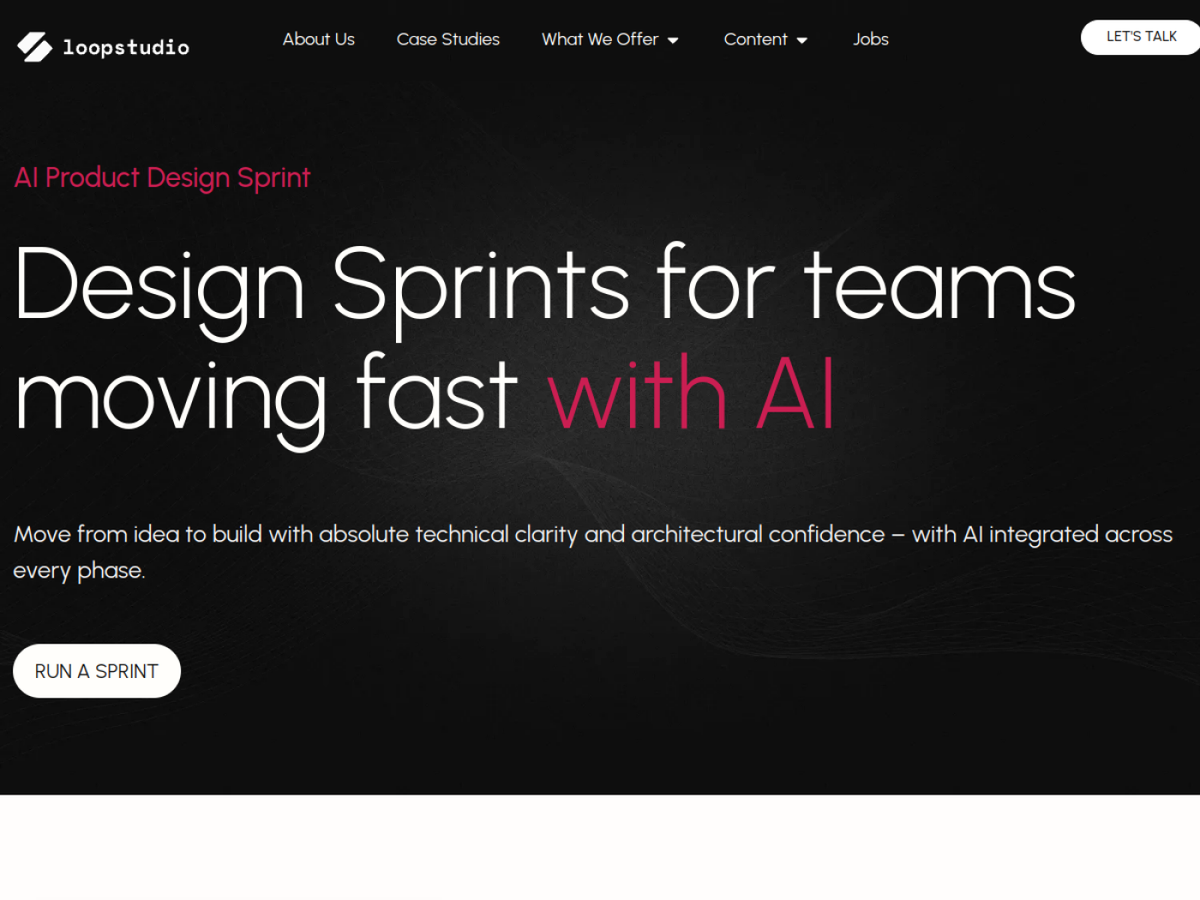
LoopStudio is the provider whose figures anchor the table above, so it is worth seeing how the tiers are built rather than just what they cost.
Each tier names its team, its scope limit and its deliverables on the page. The validation tier runs four working days across discovery, architecture, prototype and validation.
The firm has been running product sprints for more than six years, and works with teams in fintech, healthtech and cybersecurity. Every sprint is designed to feed a follow on production build.
One practical note for regulated buyers. The sprint pages publish security practices rather than audit reports, so ask for any SOC 2 or ISO 27001 documentation by name on the first call.
If you are weighing a one week sprint against a standing research practice, our comparison of design sprint vs product discovery sets out what each one asks of your team.
Hidden Costs to Plan For
The invoice is not the whole number. Three costs land on your side of the line and rarely appear in a quote.
Stakeholder time. A sprint needs decision makers available for the full engagement. Five people clearing a week is often the largest real cost.
Recruiting participants. If you want real users rather than synthetic profiles, someone has to find, schedule and usually pay them.
The build that follows. A sprint produces a validated direction, not a product. Budget the engineering work before you commit, and see our guide to MVP costs for what that stage runs.
Final Thoughts
So how much does a design sprint cost in 2026? Budget $4,000 for validation only and around $9,000 once working code is part of the deliverable.
The practical advice is simple. Decide first whether you need an answer or an artifact, because that single choice moves the price more than any negotiation will.
If you are still comparing providers rather than brackets, our rundown of design sprint agencies for enterprise companies covers who does this work. For adjacent budgets, see nearshore development rates and the legacy modernization price guide.
Want more insights on choosing the right development partner? Check out our blog.