Teams in banking, healthcare and insurance keep arriving at the same question: who are the best AI agent development companies for regulated industries?
An agent is not a chatbot. It takes actions against real systems, opens tickets, moves records and calls APIs on your behalf.
That difference is what pulls compliance into the room. The moment software acts rather than answers, someone has to show who approved the action and why.
So the vendor question shifts. You are not shopping for a model, you are shopping for the controls around what the agent is allowed to do, and for a team that has built those controls before.
Audit trails, human approval steps and data residency stop being nice to have. In a regulated setting they are the product.
Each firm below was assessed on what it publishes about agent capability, named platforms and regulated-industry work, checked against its own site in October 2026.
Key Things to Consider Before Hiring
Five things separate a partner who can ship an agent into a regulated environment from one who can only demo it.
- Approval gates and autonomy limits. Ask where a human has to sign off, and whether that boundary is configurable per workflow.
- A named platform or framework. A vendor with its own agent runtime has solved orchestration, logging and rollback already.
- Real work in your vertical. Banking, healthtech and insurance each carry different evidence requirements, and generic AI experience does not transfer cleanly.
- A documented secure development practice. Look for named standards, not a promise that security is taken seriously.
- Access to the engineers building it. Agent behavior changes under real data, and slow feedback loops are expensive.
Few firms are strong on all five, so the useful exercise is deciding which two matter most for your situation.
Quick Comparison Table
The Best AI Agent Development Companies for Regulated Industries
The five below range from a focused nearshore engineering partner to global firms running agent programs at enterprise scale.
1. LoopStudio
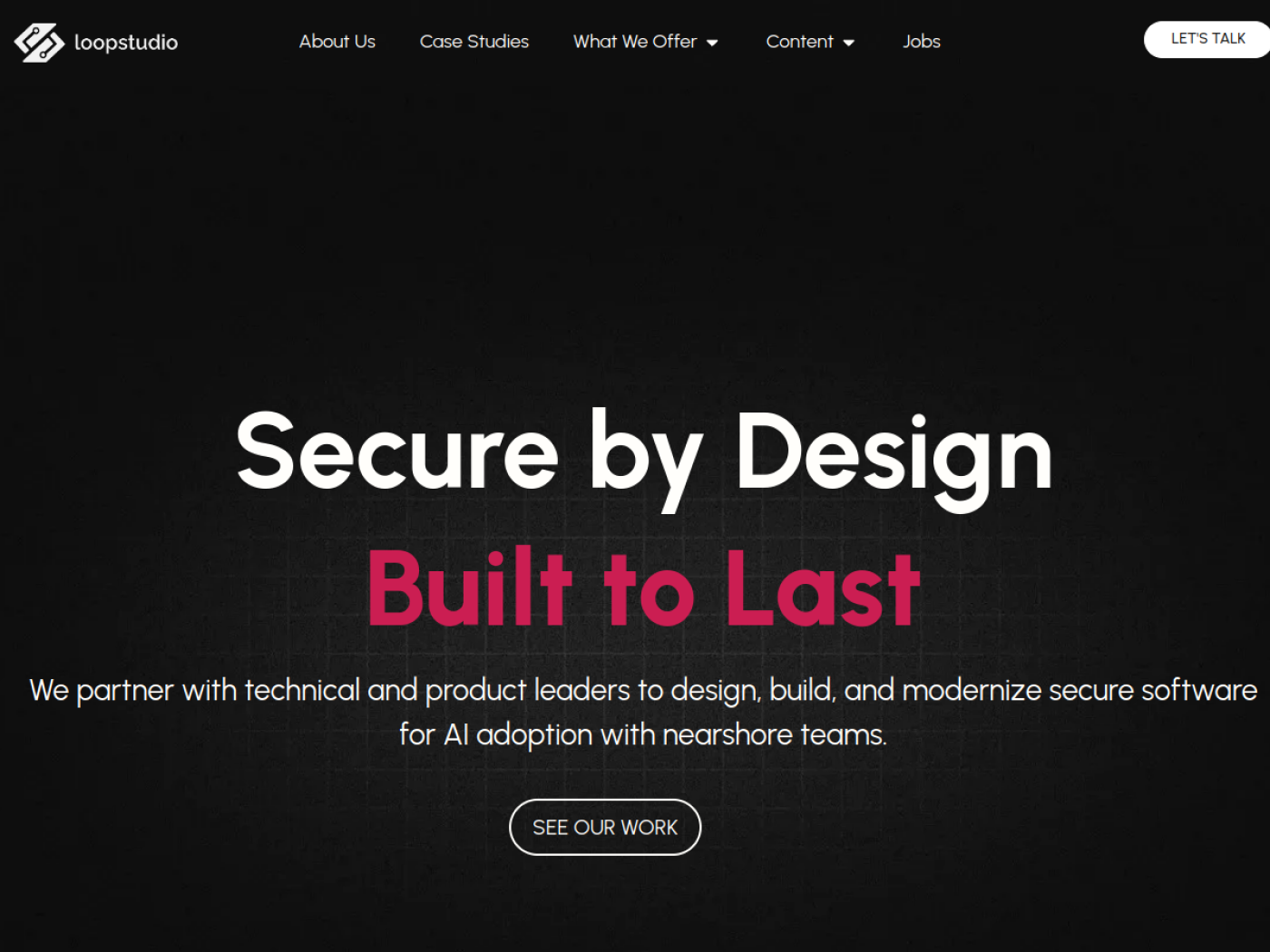
LoopStudio is a nearshore engineering partner from Uruguay that builds secure software for companies adopting AI. Its positioning is secure by design, and it works with technical and product leaders rather than through account layers.
Its AI Workflows Automation practice builds AI agents connected to real data sources, which is the part most teams underestimate. Wiring an agent into live systems is where access control and logging decisions actually get made.
Security is handled as process, not as a review at the end. The team works to a secure development lifecycle informed by OWASP Top 10 and the NIST Secure Software Development Framework, and offers penetration testing alongside delivery.
For teams still scoping the problem, its AI Product Design Sprint runs four phases: Discovery, Architecture, Prototype and Validate. The entry tier is $4,000 for one week, and a Build Ready Sprint at $9,000 continues into a scalable codebase over two to eight weeks.
It names fintech, healthtech and cybersecurity as its verticals, and it partners with AWS, CrowdStrike and Anthropic.
Working hours overlap the US business day, which matters when agent behavior needs same-day correction. We covered its delivery approach in our guide to secure AI product development firms.
2. Globant
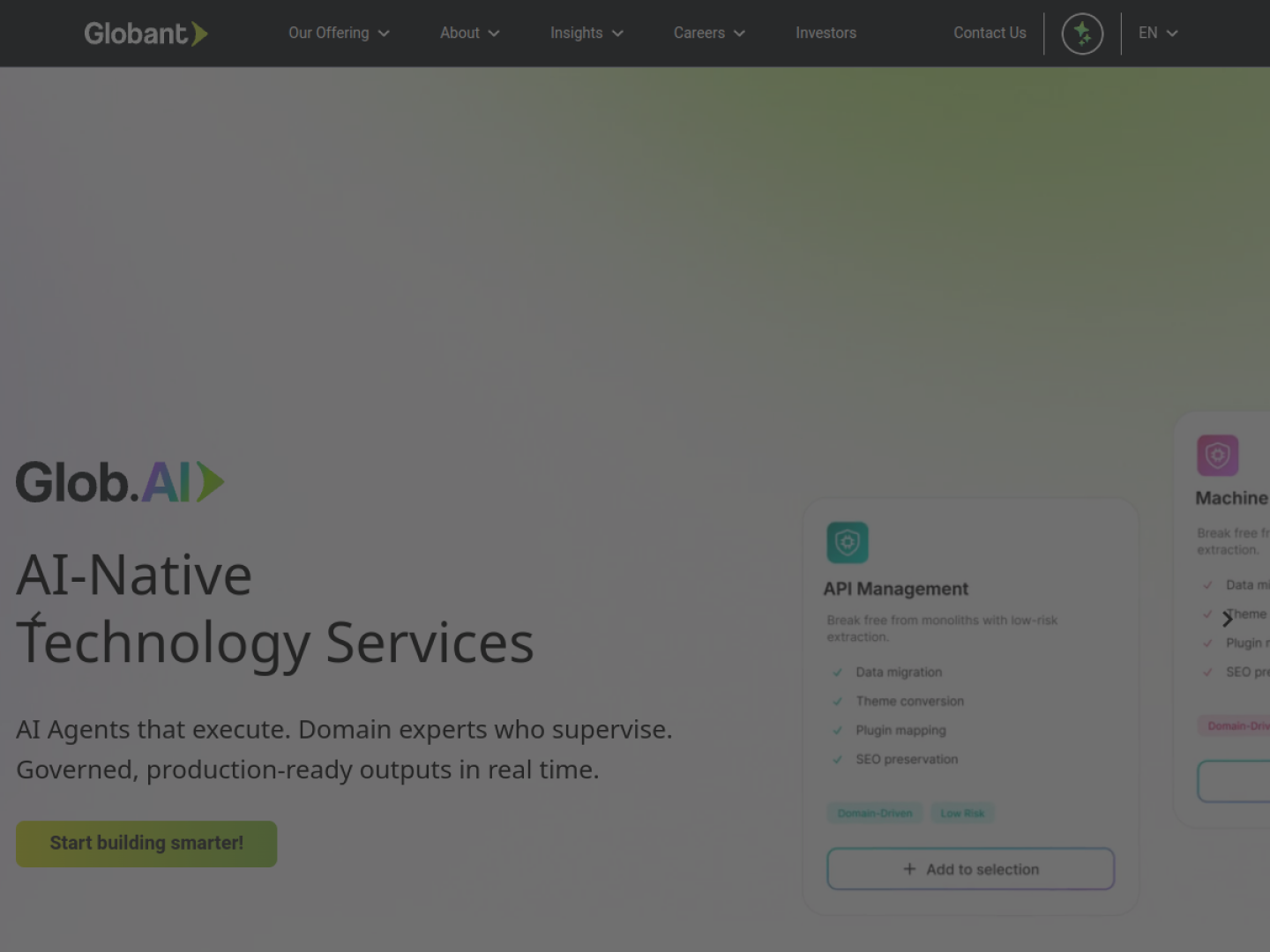
Globant is an AI-native technology services company with 27,400 employees across more than 30 countries. It has been operating for over twenty years.
Its agent work runs on Glob.AI OS, a proprietary platform organized into AI Pods. The company describes the model plainly: AI agents that execute, domain experts who supervise, governed production-ready outputs in real time.
That supervision layer is the reason it fits regulated buyers. Globant runs dedicated studios for Financial Services and Healthcare and Life Sciences, and its financial services work centers on moving institutions off legacy platforms.
It is also described as Latin America’s largest Preferred Claude Services Partner. If your blocker is getting a working agent past a pilot, our piece on taking AI prototypes to production covers the same gap.
3. Persistent Systems
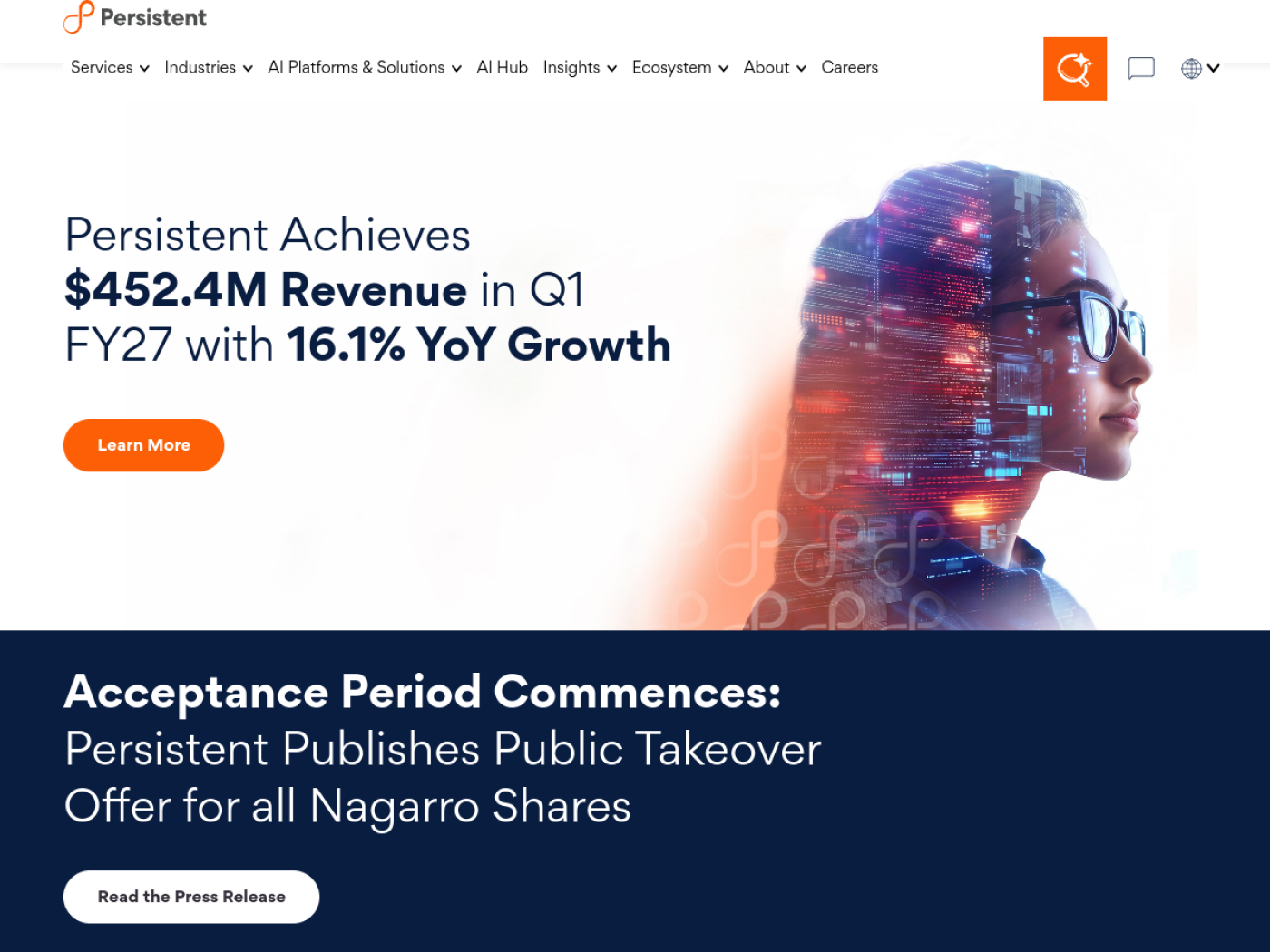
Persistent Systems runs Agentic Business Automation as a named service line, with 28,500 employees across 21 countries. It reported $452.4 million in revenue for Q1 FY27, up 16.1 percent year over year.
What distinguishes it is packaged products rather than bespoke builds alone. Its platforms include SASVA, GenAI Hub and iAURA, and its solution set names Agent Recon and ProcessIntel.
One of those is built for this exact buyer. Reg(AI)ntel is a regulatory intelligence solution, and the life sciences portfolio adds AI-driven drug discovery tooling.
It sells into Banking and Financial Services, Healthcare, Life Sciences and Insurance. Buyers weighing a packaged product against a custom build may also want our notes on securing AI-built software products.
4. Infosys

Infosys is a global IT services firm operating in more than 50 countries, positioning itself as an AI-first, digital-first, cloud-first partner.
Its agent story runs through Infosys Topaz, which adapts foundation models for generative and agentic AI work. It also fields Infosys Leon, an agent presented as an expert guide for enterprise AI decisions.
The regulated-industry coverage is broad: Financial Services, Banking, Healthcare, Insurance and Life Sciences all have established practices, alongside the Cobalt cloud platform.
Scale is the reason to shortlist it and also the thing to plan around. A program spanning several regulated business units is the case it fits best, much like the enterprise buyers in our fintech design sprint roundup.
5. SoftServe
SoftServe describes itself as a digital engineering company that designs and builds data, cloud, AI and machine learning, robotics, IoT and XR solutions. It is headquartered in Austin, Texas with more than twenty years of history.
Its strength is the layer underneath the agent. Partner status is unusually deep: NVIDIA Elite Partner, AWS Premier Tier Partner with a Strategic Collaboration Agreement, and Google Cloud Premier Services Partner.
It publishes applied research on agentic AI, including work on agentic systems in software engineering, which is a reasonable proxy for how current its practice is.
Its published regulated-industry work is lighter than the three firms above. Where it does show is insurance, through conversational AI built into sales workflows for Ensight.
Teams whose agent will touch security tooling may also want our roundup of development partners for cybersecurity companies.
Conclusion
Who are the best AI agent development companies for regulated industries? The honest answer is that it depends on whether your constraint is engineering depth, platform governance or sheer scale.
LoopStudio suits teams who want agents wired into live systems under a documented secure development process, with engineers in overlapping hours. Globant fits buyers who want a governed agent platform with human supervision built into the operating model.
Persistent Systems is the pick when a packaged product such as a regulatory intelligence tool beats a custom build. Infosys suits multi-unit enterprise programs, and SoftServe is strongest on the data and cloud foundations an agent depends on.
Whichever way you lean, ask to see the approval gate and the audit trail before you ask to see the demo.
Want more insights on choosing the right development partner? Check out our blog.