The best AI product design sprint agencies for healthtech products are the ones that can turn a clinical idea into a tested prototype without losing sight of the rules that govern patient data.
An American Medical Association survey published in February 2025 found that 66% of physicians reported using health AI in 2024, up from 38% the year before.
That jump changes what a design engagement has to produce. The question is rarely whether to use AI, and usually which workflow it belongs in.
A design sprint fits that question because it is short and ends in something testable. The risk is a partner who runs a polished workshop and leaves you with slides instead of a build plan.
The five firms below were assessed on the sprint formats, healthcare and clinical work, AI practice and compliance credentials each one publishes, checked against its own site in October 2026.
Key Things to Consider Before Hiring
Healthtech buyers get different answers to these questions than fintech or enterprise buyers do. Ask all five before you sign anything.
- Does the sprint end in a build plan? A prototype is only useful if it comes with scope, a stack recommendation and a defensible next step.
- Who will be in the room? Ask for the named roles on the sprint team, and whether an engineer is one of them.
- Ask for the paperwork early. Request a signed business associate agreement and a current attestation report before any real patient data is involved, and treat a vague answer as an answer.
- Who validates the design? Clinical software is used under time pressure, so testing with real clinicians beats testing with a convenience sample.
- What happens the week after? Find out whether the same firm can build what it designed, or whether you will be handing the work to someone else.
It is rare to find one company that is equally strong on all five, which is why the right pick depends on which of them is your actual constraint.
Quick Comparison Table
The Best AI Product Design Sprint Agencies for Healthtech Products
Each firm below publishes enough detail about its process and healthcare work to check. They are ordered by how directly they serve a team shaping an AI feature for a clinical product.
1. LoopStudio
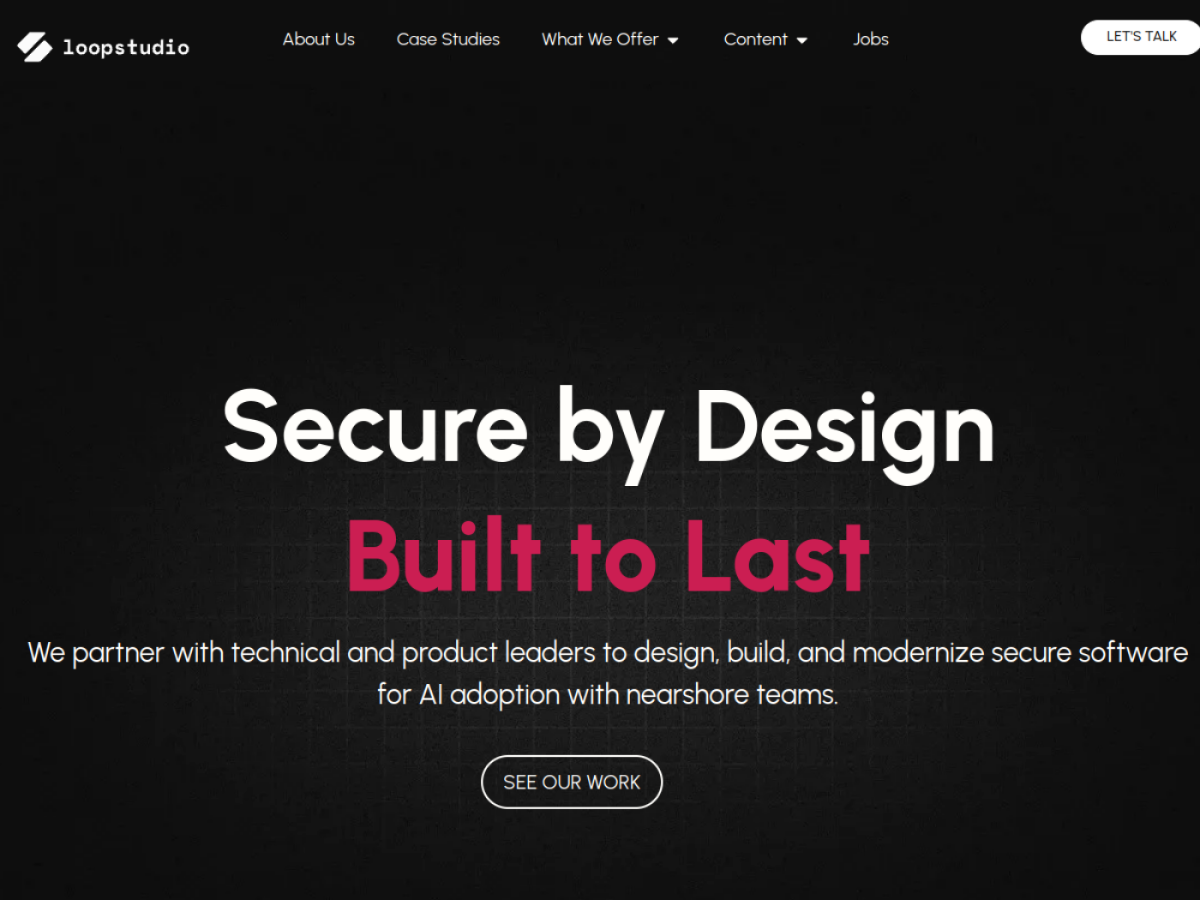
LoopStudio runs an AI Product Design Sprint built around four named phases: Discovery, Architecture, Prototype and Validate. Healthtech is one of three verticals its sprint page names, alongside fintech and cybersecurity.
It is the only firm here that publishes fixed prices for the format. The one-week AI Product Design Sprint runs $4,000 and covers a single use case.
The Build Ready Sprint runs $9,000 over two to eight weeks and produces a functional prototype on a scalable codebase.
Each sprint ends with a validated interactive prototype, an AI opportunity map and a Build Brief carrying a tech stack recommendation and MVP scope.
The company states that every engagement integrates a Secure Software Development Lifecycle from architecture to deployment, and names OWASP Top 10 and the NIST SSDF as its standards.
Two things to know. LoopStudio publishes no HIPAA, SOC 2 or ISO attestation, so ask for a BAA directly, and its sprint team is a designer plus a technical advisor rather than a clinical research group.
It works as a nearshore partner from Uruguay on hours that overlap the US business day. For the same format in another regulated vertical, see the fintech SaaS version of this list.
2. GoInvo
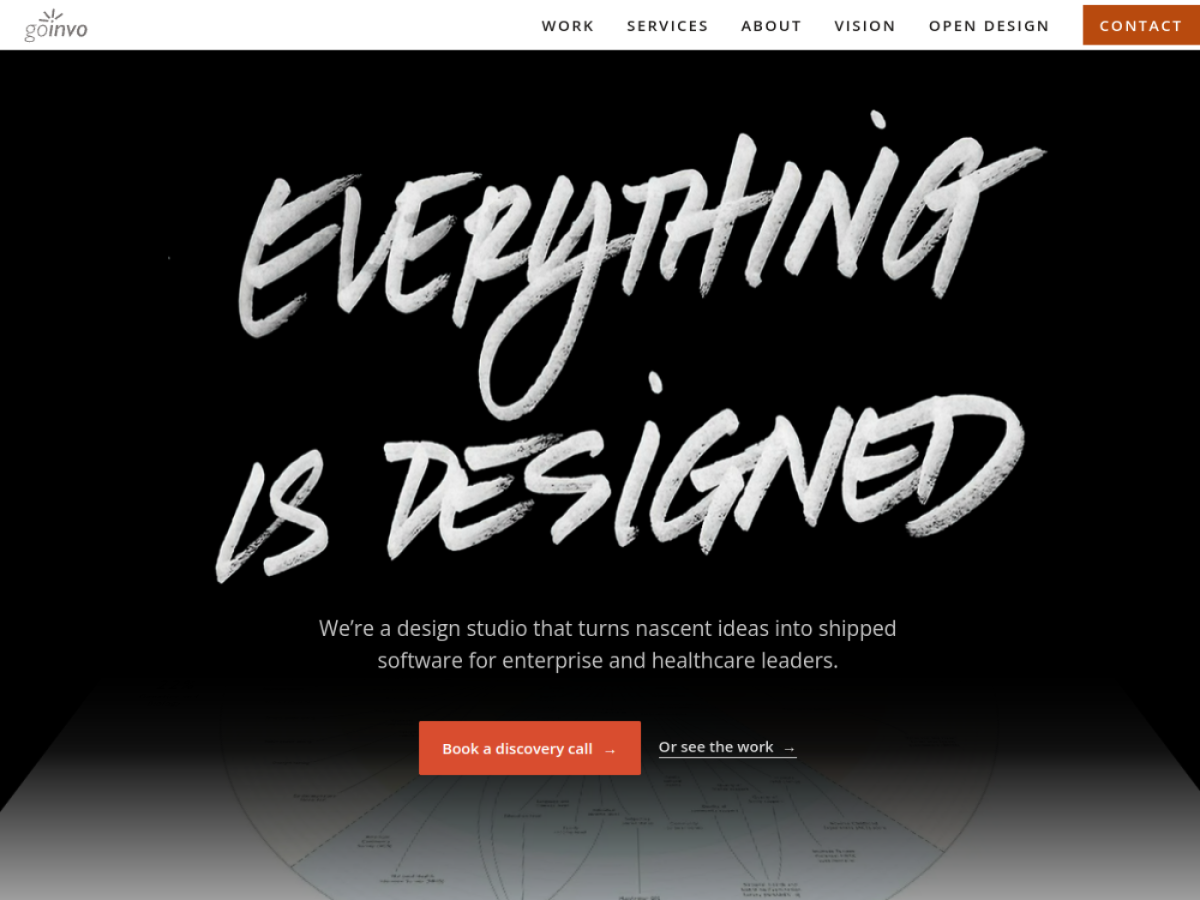
GoInvo is a Boston-area design studio that says it has only ever designed software, with particular depth in regulated and healthcare work.
The record is unusually concrete. Over twenty years it reports 60+ shipped products, with named work for Johnson & Johnson, Mass General Hospital, the NIH and Mount Sinai.
Its three service lines map onto healthtech problems directly. Shape takes a stalled product to launch, and Regulate makes clinical, payer and patient workflows usable under HIPAA and FDA constraints.
GoInvo does not sell a packaged sprint. It embeds with client teams and starts from a discovery call, so this is the pick when the problem is genuinely clinical and you want depth over a fixed timebox.
For the build side of that same problem, see our list of healthcare software development companies for HIPAA-compliant products.
3. Koru UX Design
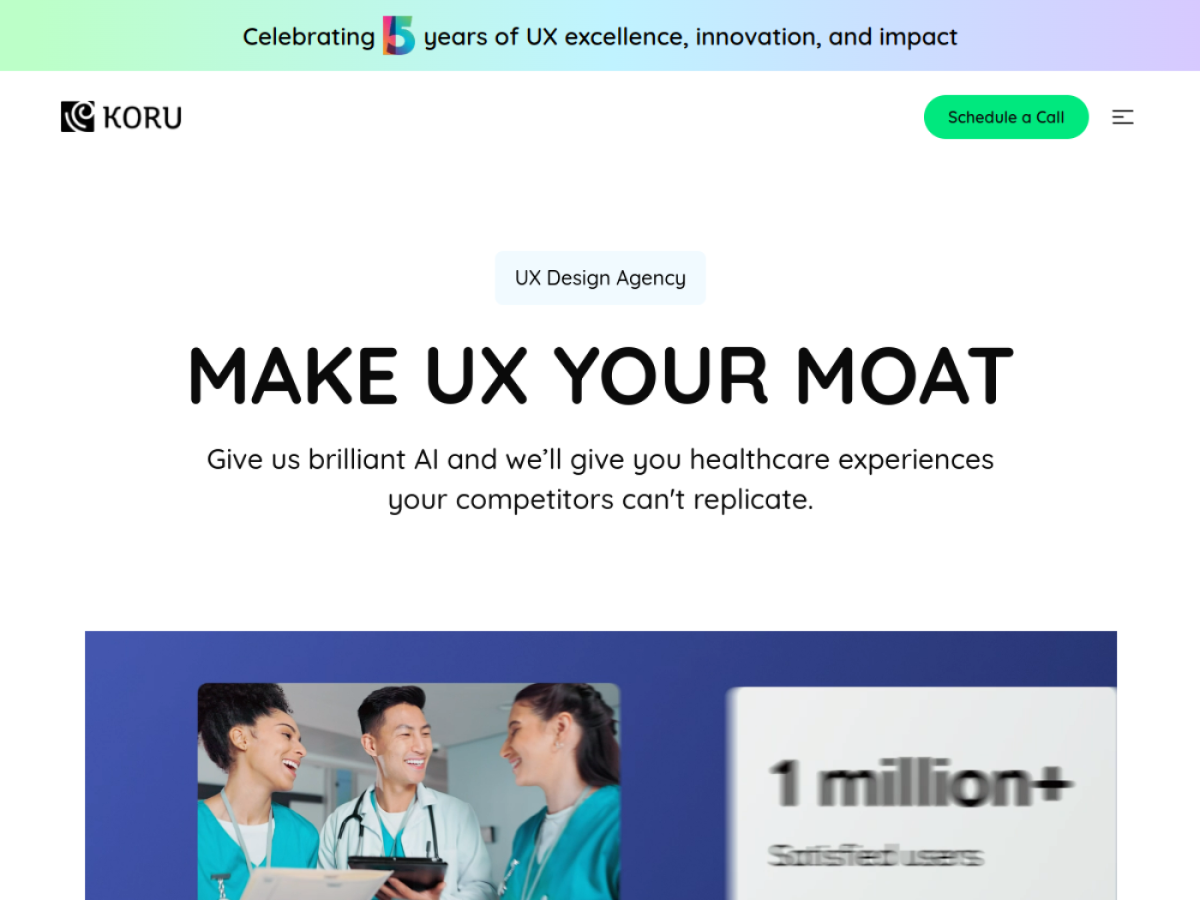
Koru UX Design designs complex healthcare and enterprise software, and healthcare is the core of the practice. It reports more than 1,500 healthcare UX projects over roughly fifteen years.
The coverage runs across the clinical stack: EHRs, clinical decision support, ePrescribing, lab systems, medical imaging, patient portals, remote patient monitoring and revenue cycle management.
Its AI work is specific about the hard part, offering UX for agentic features framed around autonomy, user control and transparency. Those are the questions a clinical reviewer asks first.
The model is an embedded UX team rather than a one-week sprint, run under a Build, Use, Learn, Repeat framework. Named clients include eClinicalWorks, MedBridge and healow.
4. Fuzzy Math
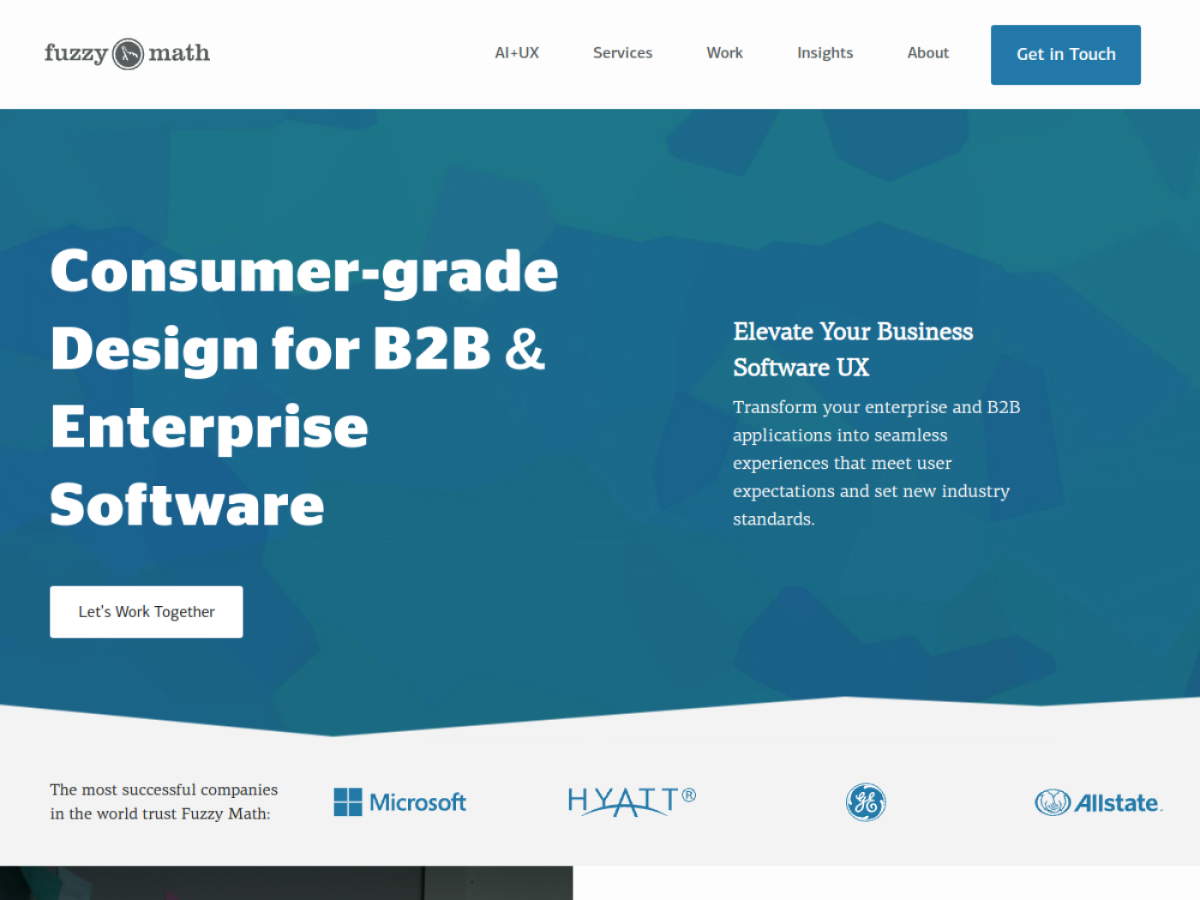
Fuzzy Math is a UX consultancy working on enterprise software since 2009, with offices in Chicago and Toronto. Its pitch is consumer-grade design for B2B products.
It is the closest thing here to a low-commitment entry point, publishing three one-week engagements: a Strategy Workshop, AI in Design Training, and a UX and competitive evaluation.
Its healthcare evidence sits on the B2B side, including a SaaS pharmaceutical trial analysis platform and work with Clarix Imaging. That suits health IT and life sciences platforms.
Delivery follows a four-stage system it calls Discover, Design, Deliver and Drive. Buyers weighing a similar format outside healthcare can look at the enterprise design sprint agencies.
5. Bold Insight
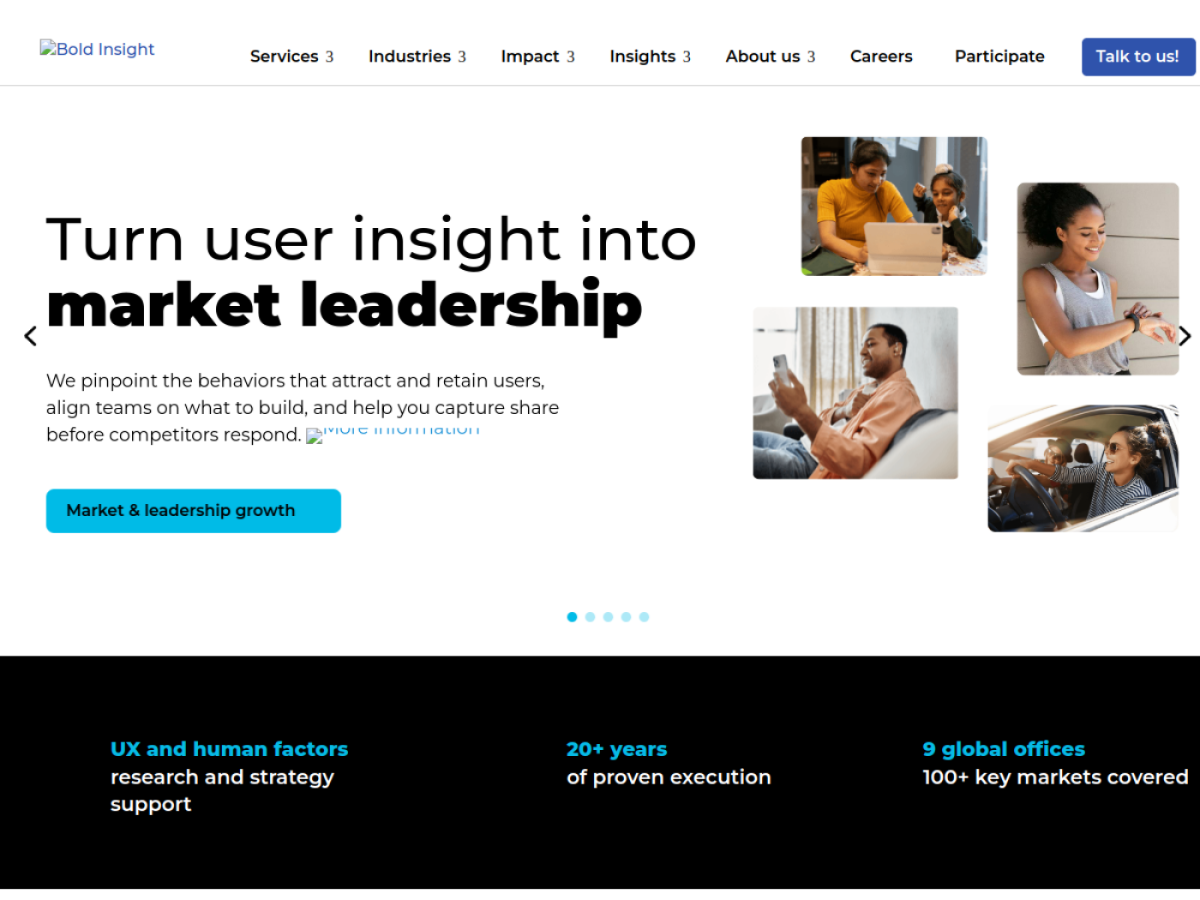
Bold Insight is a UX and human factors research agency with offices in the Chicago area and London. It covers healthcare alongside automotive, FemTech, government and consumer technology.
Its specialism is the evidence layer rather than the design itself. The firm offers medical device research and human factors research, plus an IFU Scorecard for evaluating labeling ahead of review.
That research runs under ISO 9001:2015 certification, which matters when the output has to survive a submission rather than an internal review.
Bold Insight names no clients publicly, so ask for references in your device class. It is the right call when your constraint is proving a regulated product is safe to use.
It pairs naturally with a design partner from earlier in this list, in the same way a cybersecurity product sprint does.
Conclusion
The best AI product design sprint agencies for healthtech products differ less on design skill than on what they hand you at the end. Pick the one whose output matches your next decision.
LoopStudio is the strongest fit for a team that wants a fixed-scope AI sprint ending in a build-ready plan. GoInvo suits deeply clinical design problems, and Koru UX Design is built for teams who need healthcare UX capacity alongside their own.
Fuzzy Math is the easiest way to start small on a B2B health platform, and Bold Insight is who you call when the product has to prove it is safe to use.
Want more insights on choosing the right development partner? Check out our blog.