The best healthcare software development companies for HIPAA-compliant products are not the ones with the slickest engineering blog. They are the ones that can sign a business associate agreement and then live up to it.
One fact reshapes the search. The HIPAA Security Rule applies to business associates, not only to hospitals and insurers, so a development partner that handles electronic protected health information is regulated directly.
The same rule is deliberately flexible. It asks regulated entities to run a risk analysis and apply reasonable safeguards, and leaves the specific measures to them, as the HHS Security Rule guidance sets out.
It also means there is no official HIPAA certificate. HHS does not certify or endorse any vendor or product, which is why HIPAA-compliant means very different things from one supplier to the next.
So the weight falls on two things: a partner’s engineering habits, and the attestations it can actually show you. That is the same pattern we found in AI agent development companies for regulated industries.
Each company below was assessed on the healthcare work, security practices and compliance credentials it publishes, checked against its own site in October 2026.
Key Things to Consider Before Hiring
Five checks separate a partner who can carry regulated work from one who quietly hands the risk back to you.
- A business associate agreement, early. HHS requires a written contract before a business associate touches ePHI, so ask for the BAA during evaluation, not at signature.
- Attestations you can verify. Because HIPAA has no certification, look for SOC 2 Type 2, ISO 27001 or HITRUST, which are audited, dated and can be requested.
- Interoperability depth. HL7 and FHIR work, EHR integration and claims data are where healthcare projects usually slip, not in the application layer.
- Security inside the lifecycle. Threat modeling, code review and penetration testing during the build cost far less than remediation after a failed audit.
- Clinical and regulatory context. Teams that have shipped for providers, payers or medtech already know what an auditor will ask them to produce.
It is rare to find one company that is strongest on all five. Decide which two matter most for what you are building, the same trade-off we mapped for secure AI product development.
Quick Comparison Table
Five Healthcare Software Development Companies Worth a Shortlist
Each entry below names what the company publishes about its healthcare work, and who it serves best.
1. LoopStudio
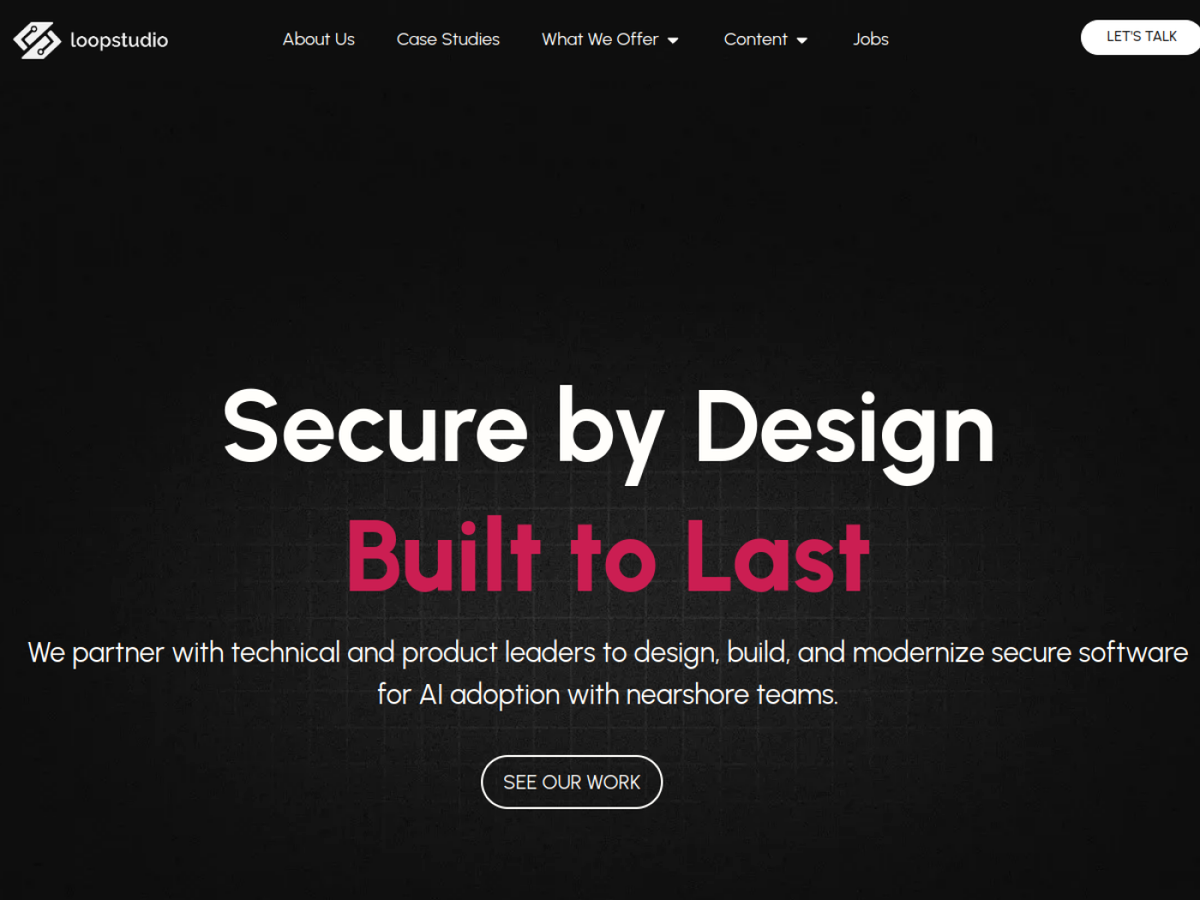
LoopStudio is a nearshore software development company based in Uruguay that designs, builds and modernizes secure software, with teams working in overlap with US business hours.
Its security claim is unusually concrete. The company states that every engagement integrates a Secure Software Development Lifecycle from architecture to deployment, adhering to OWASP Top 10 standards and integrating the NIST SSDF.
Healthtech is one of three focus verticals it names, alongside fintech and cybersecurity, on its AI Product Design Sprint page. That sprint runs four phases: Discovery, Architecture, Prototype and Validate.
Penetration testing is run in house through its cybersecurity practice rather than subcontracted, and its named partners include AWS, CrowdStrike and Anthropic.
It is the strongest fit when the binding constraint is engineering discipline: a team building or modernizing a healthcare product that wants security designed in from the first sprint, from a partner in a compatible time zone.
2. CitiusTech
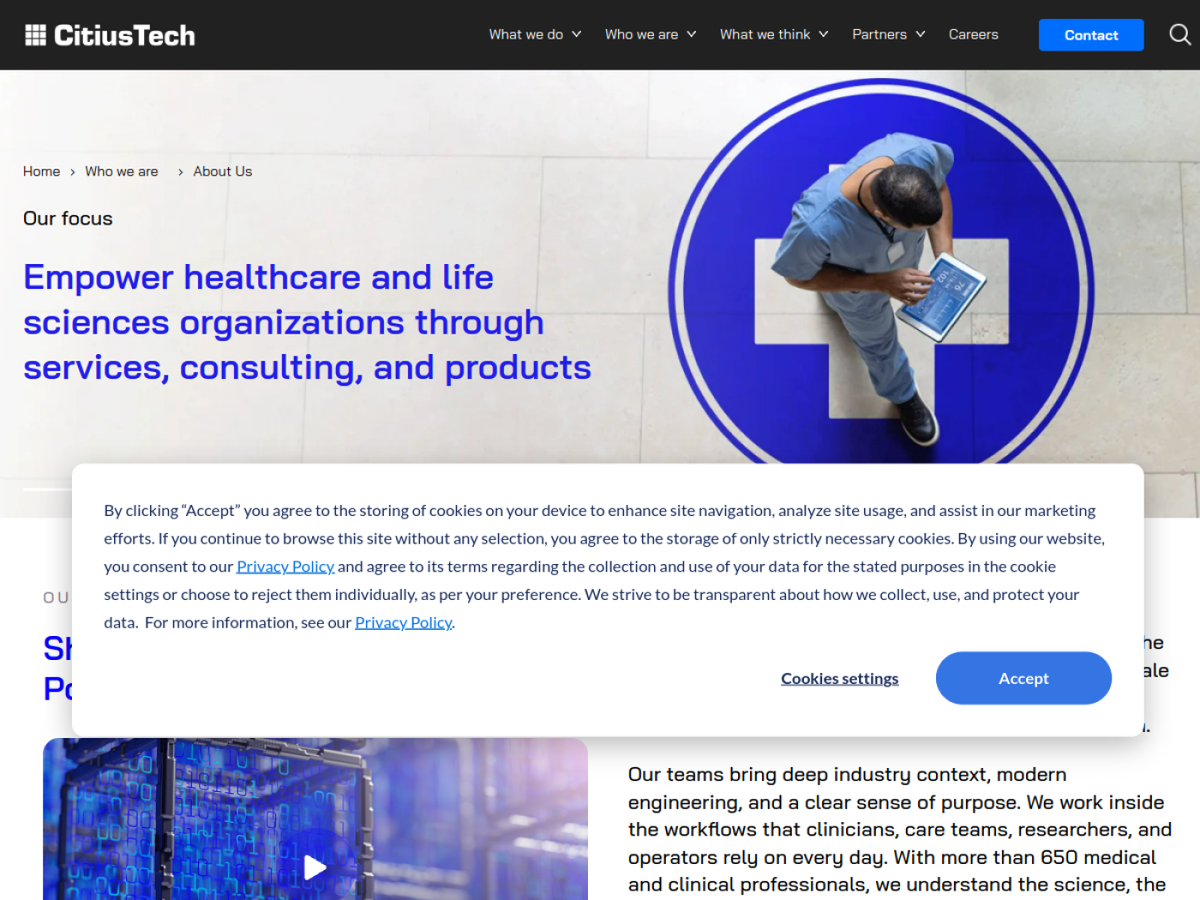
CitiusTech works only in healthcare and life sciences. It reports more than 20 years in the market, over 7,700 employees and work with 140+ enterprises.
Its four named segments are medtech, payers, providers and life sciences, and it says it has worked with 40 percent of Fortune 500 healthcare organizations.
Named services include interoperability and integration, data engineering, quality and validation, and cybersecurity. Its Perform+ platform covers quality measures, and its industry solutions include FHIR-based electronic prior authorization.
CitiusTech is the right call for payer or provider programs at enterprise scale, where the work is as much regulatory reporting and clinical data as it is application code.
3. HTD Health
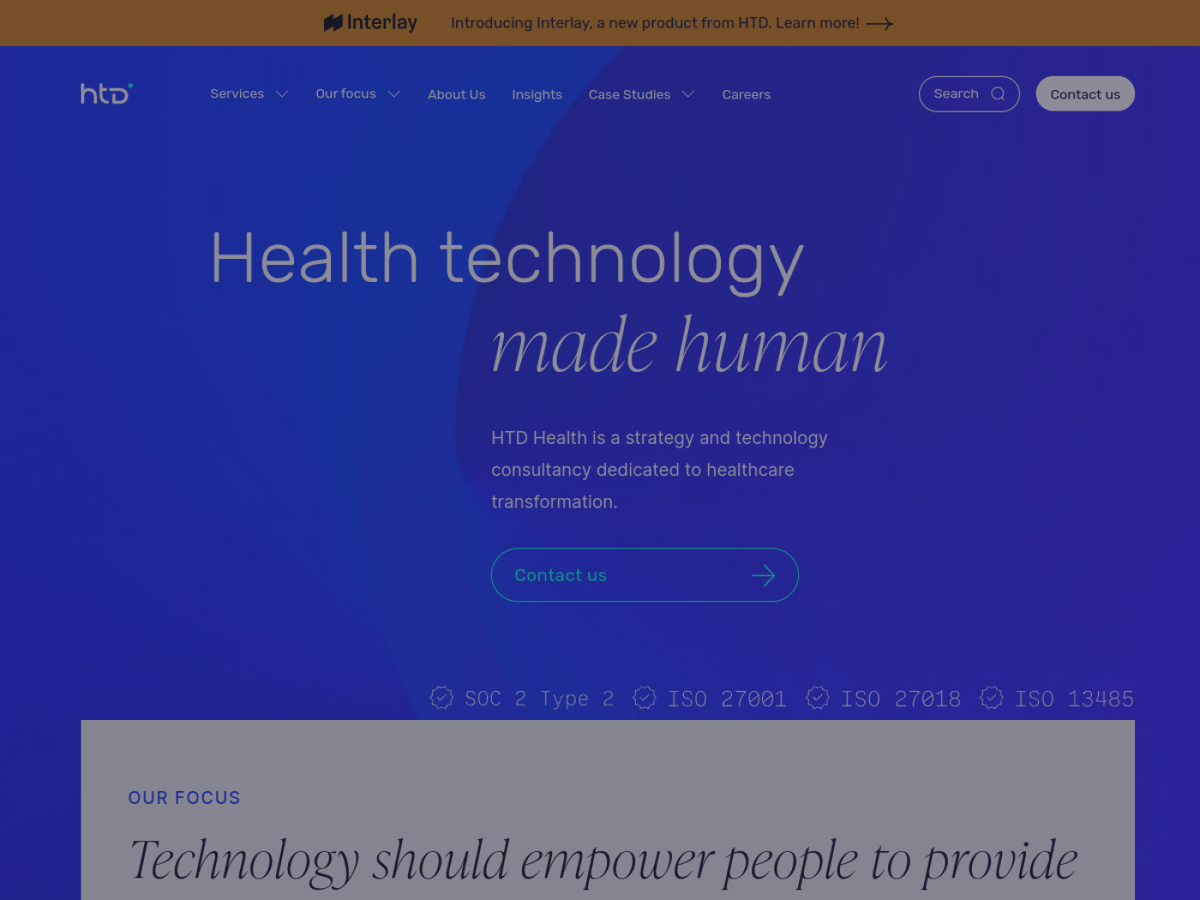
HTD Health is a strategy and technology consultancy dedicated to healthcare transformation, with offices in New York, Warsaw, Lodz and Buenos Aires.
It carries the clearest set of audited credentials on this list. Its site displays SOC 2 Type 2, ISO 27001, ISO 27018 and ISO 13485.
That last one is worth knowing: ISO 13485 is the quality management standard for medical devices, so it matters if your product may fall under device rules.
Services run from strategy advisory and human-centered product design to custom development and healthcare integrations, including FHIR applications for major EMR systems.
It suits a digital health company that wants one partner for both product design and the compliance evidence an enterprise buyer or investor will ask to see.
4. Chetu
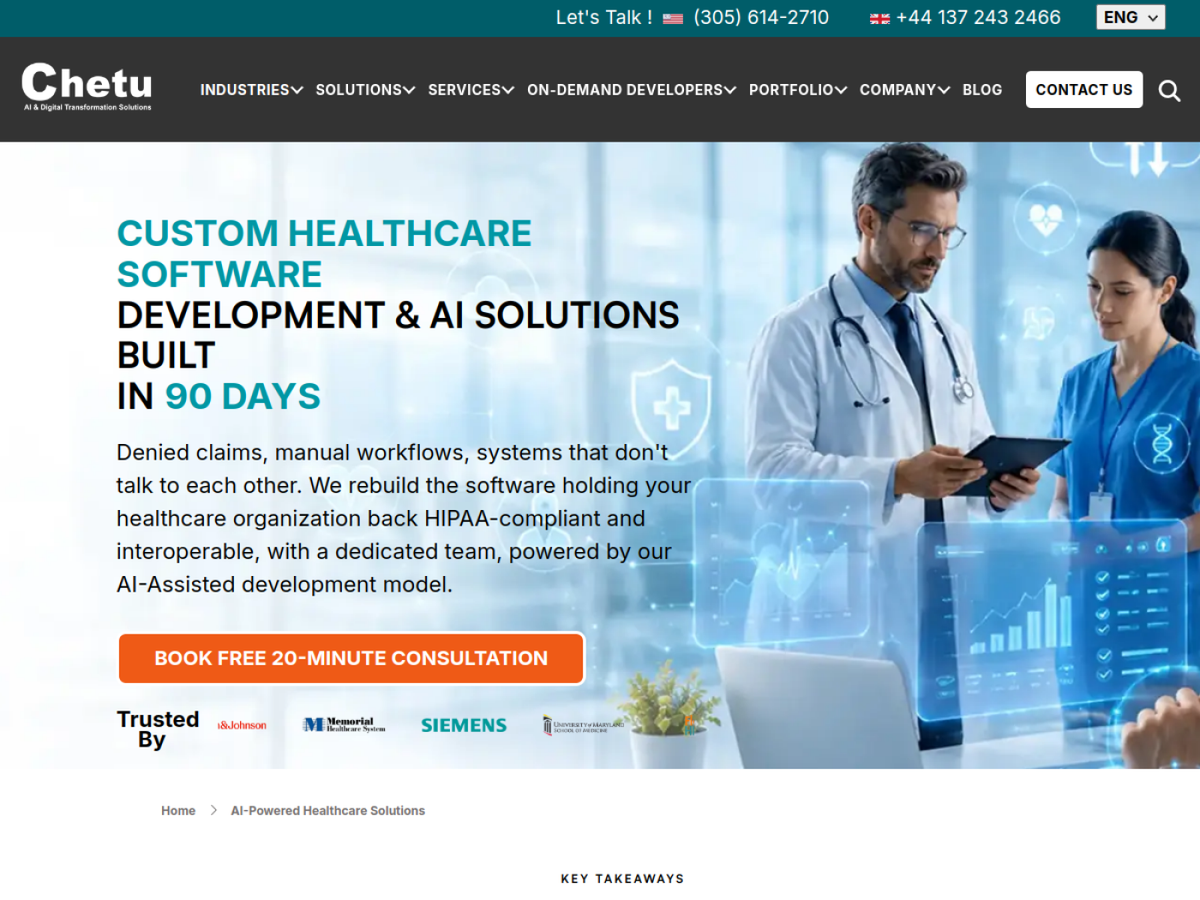
Chetu is a US custom software company headquartered in Sunrise, Florida. It reports 26+ years in business and runs a dedicated healthcare practice.
Its healthcare catalog is the broadest here: EHR and EMR modernization, revenue cycle management, telehealth, patient engagement, remote patient monitoring, pharmacy and medical imaging software.
The company describes HIPAA-aligned delivery and names HL7 and FHIR for integration work. Its healthcare page shows Johnson & Johnson, Memorial Healthcare System and Siemens among client logos.
Chetu fits an operator who already knows which system has to be replaced, which is a different brief from the one covered in legacy modernization for secure software systems.
5. Arkenea
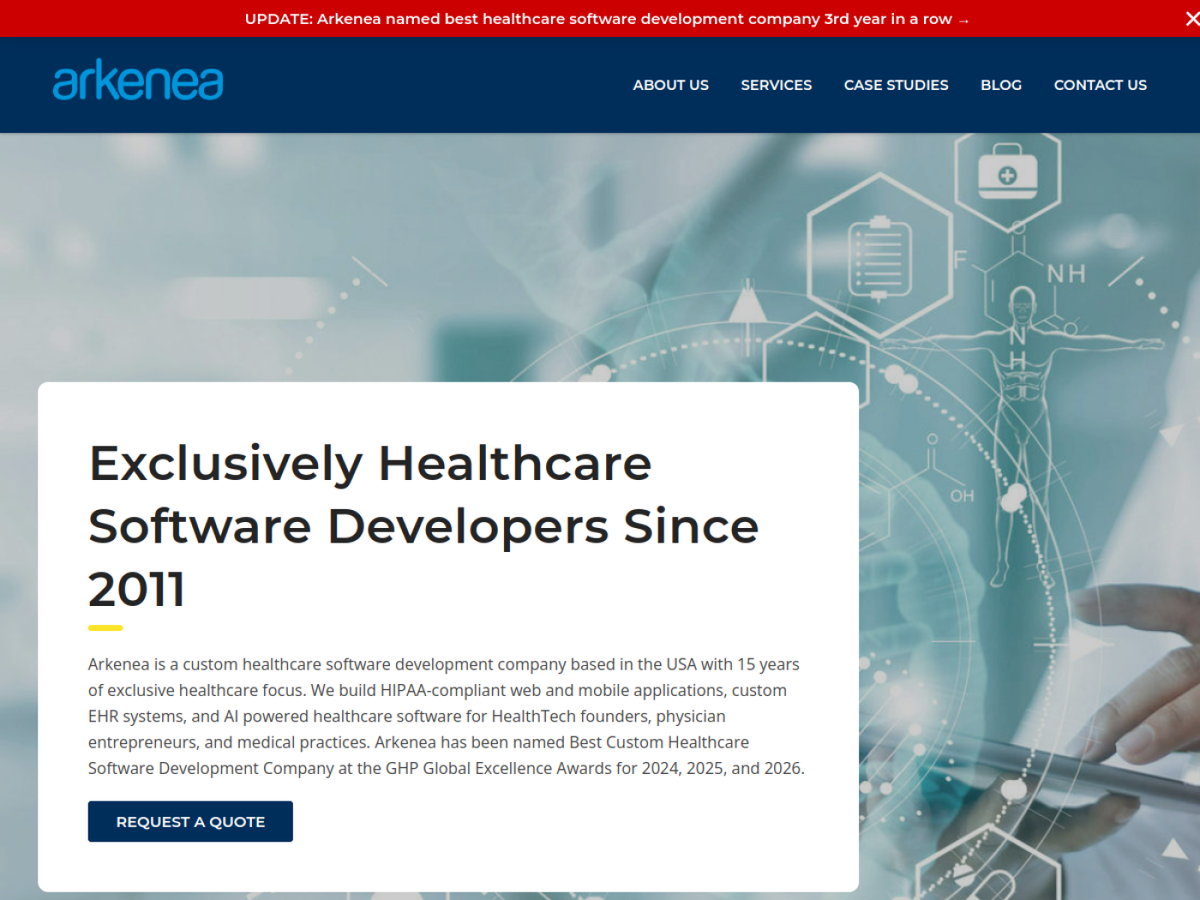
Arkenea describes itself as an exclusively healthcare software developer since 2011, based in the USA, citing 15 years of healthcare-only focus and 150+ projects.
It builds HIPAA-compliant web and mobile applications, custom EHR systems and telemedicine platforms. It describes HIPAA compliance as an architectural decision, with encryption, access controls and audit logging designed in from the start.
Named clients include Novo Nordisk, NPHub and Cumberland Medical Center. It was named Best Custom Healthcare Software Development Company at the GHP Global Excellence Awards for 2024, 2025 and 2026.
Arkenea is the natural fit for a healthtech founder or medical practice shipping a first product, a brief that overlaps with MVP development for secure and scalable products.
Conclusion
The best healthcare software development companies for HIPAA-compliant products depend on whether your hardest problem is engineering discipline, enterprise scale or clinical domain depth.
Settle that question first, then ask every shortlisted partner for a BAA and a current attestation report before you compare prices.
LoopStudio is the pick when security has to live inside the lifecycle and you want nearshore overlap. CitiusTech suits enterprise payer and provider programs. HTD Health brings audited certifications and FHIR integration work.
Chetu covers the widest range of healthcare systems from a US bench, and Arkenea is built around founders and practices shipping their first product.
Shortlist two, run a short paid discovery with each, and compare what they are willing to put in writing.
Want more insights on choosing the right development partner? Check out our blog.